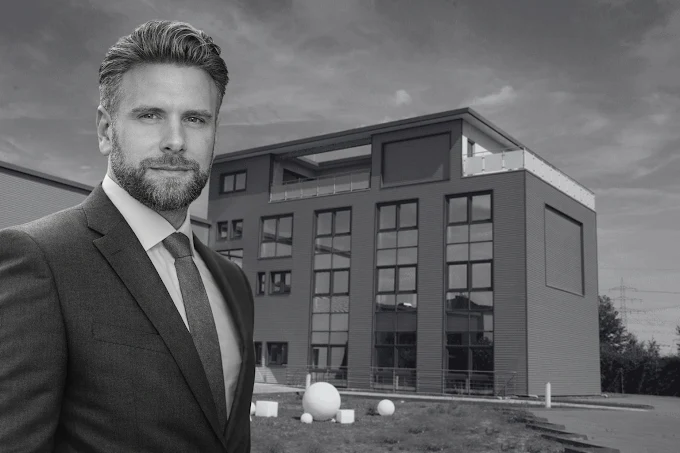
In front of the office · Herseler Strasse, Wesseling
Robin Henn
Civil engineer (Dipl.-Ing.) · General planner
One point of contact who can calculate, plan and build your house — and stands behind every number.
10 years of profession · 70+ completed building projects
Call 0175 44 39 215Weekdays 9–18 h · Reply within 24 hours
Send photos via WhatsAppPath
Why I plan this way
I chose civil engineering early — not as a detour, but as a professional commitment. Whoever plans a house should be able to calculate it. Structure and building physics are not deliveries to the design. They are the design.
A building has to work in thirty years: structurally, thermally, in upkeep. That is why I would rather decide a detail twice on paper than once on the construction site.
Ten years and more than seventy building projects have taught me what clients really need: reliable numbers, clean documentation and one person who remains reachable. Substance before promise.
Seven disciplines, one roof
What you get
From the first conversation to design development: LP 1 to 3 with one point of contact.
Statics verifiable to Eurocode, calculated in-house. No waiting for a second office.
Thermal and sound insulation and compliance emerge alongside the design, not after it.
Details at the depth the construction site needs. LP 5.
Making offers comparable, controlling execution, spotting change orders early. LP 6 to 8.
Cradle to Cradle and DGNB preparation when the project calls for it.
After acceptance: defect tracking and deadlines in view. LP 9.
Honestly
What I do not do myself
The HOAI phase 4 permit submission runs for all permit-requiring projects in cooperation with a partner architect registered with the AKNW architects list.
Subsidised energy consulting and the individual renovation roadmap run through a listed energy-efficiency expert.
I take on the projects I can be responsible for. Nothing more.
Built, not claimed
Three out of seventy
Let us talk about your project
Initial consultation free of charge and without obligation. You describe the project, I tell you what it needs.
Call Robin Henn 0175 44 39 215The fastest way
Prefer a callback?
No five questions, no form. Your name and number are enough — we will get back to you, usually the same working day.
Prefer right now? +49 175 44 39 215 · WhatsApp